


The Ripple Effect of Rising US Treasury Bond Yields: What It Means for Your Wallet
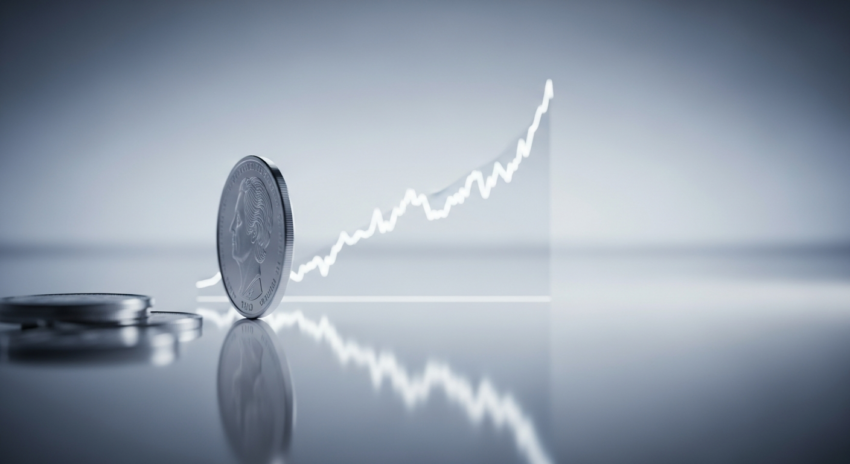
If you have been following the financial headlines this week, you have likely noticed a technical term taking center stage: US Treasury Bond Yields. While this might sound like dry, high-level financial jargon reserved for Wall Street traders, the reality is that the movement of these yields is the invisible engine currently driving the cost of living for everyone. The recent surge in the 10-year Treasury note yield is not just a statistic; it is a signal that directly influences mortgage rates, credit card interest, and the overall health of our financial system.
In this analysis, we are going to deconstruct the latest data regarding government bonds, explain why they are reaching historic highs, and most importantly, translate what this means for your personal finances, from buying a home to managing your savings.
The News: A Historic Climb in Borrowing Costs
The core of the recent economic news revolves around the benchmark 10-year US Treasury note. In recent trading sessions, the yield (or the return an investor gets on the bond) has spiked to levels we have not seen in over 16 years. This upward trajectory is a reaction to a collection of economic data suggesting that the economy is remaining surprisingly resilient despite inflation. Consequently, markets are realizing that the Federal Reserve will likely keep interest rates “higher for longer” to ensure inflation is fully tamed.
To understand the gravity of this, we must look at the data objectively. When yields rise, it indicates that investors are demanding a higher return to hold US government debt, usually because they expect interest rates to remain elevated or inflation to persist. This massive sell-off in bonds (which pushes yields up) is the market’s way of adjusting to a new economic reality: the era of “cheap money” is officially over.
Understanding the Mechanics: What is a “Yield”?
Before we dive into the consequences, let us clarify the terminology. A Treasury bond is essentially an IOU issued by the US government. When you buy one, you are lending money to the government. In exchange, they promise to pay you back with interest.
There is a fundamental rule in the bond market that works like a seesaw: when bond prices go down, yields go up.
- The Price: This is what people pay to buy the bond.
- The Yield: This is the annual return the investor makes on that bond.
Recently, investors have been selling bonds because they believe the Federal Reserve will not cut interest rates anytime soon. When everyone sells, the price of the bond drops. To make those cheaper bonds attractive to new buyers, the mathematical return (the yield) must increase. This mechanism is crucial because the 10-year Treasury yield acts as the “risk-free” benchmark for the entire global economy. If the US government has to pay 5% to borrow money, you can be certain that you—a private citizen or business—will have to pay significantly more.
For those looking to deepen their understanding of how these macroeconomic shifts affect broader markets, our section on economy offers extensive resources and analysis.

The Mortgage Link: Why Housing is Getting More Expensive
The most immediate and painful impact of rising bond yields is felt in the housing market. There is a direct, historical correlation between the 10-year Treasury yield and the average 30-year fixed mortgage rate. Banks and lenders use the 10-year yield as a baseline to set their rates. They take the Treasury yield and add a “spread” (a margin for profit and risk) on top of it.
As Treasury yields have climbed, mortgage rates have followed suit, reaching their highest levels in decades. This drastically changes the affordability calculation for potential homebuyers.
Let’s look at a practical example:
Imagine you are looking to buy a home with a $400,000 mortgage.
- At a 3% interest rate (common a few years ago), your monthly principal and interest payment would be roughly $1,686.
- At an 8% interest rate (reflecting the current surge), that same loan costs approximately $2,935 per month.
That is a difference of over $1,200 every single month for the exact same house. This surge in borrowing costs is cooling the housing market, as fewer people can afford these payments, and homeowners with low rates are reluctant to sell and lose their cheap mortgages. This dynamic is a critical factor to consider when browsing our news section for real estate updates.
Credit Cards and Auto Loans: The Trickle-Down Effect
The influence of rising yields does not stop at mortgages. It permeates every corner of consumer credit. Most credit cards have variable interest rates that are tied to the “Prime Rate,” which moves in lockstep with the Federal Reserve’s targets and is influenced by bond market conditions.
As yields stay high, the Annual Percentage Rate (APR) on credit cards increases. This means that carrying a balance becomes significantly more expensive. If you have existing debt, more of your monthly payment is going toward interest rather than paying down the principal. Similarly, auto loans are becoming costlier. The days of 0% or 1% financing for cars are largely gone, replaced by rates that can exceed 7% or 8% for buyers with good credit.
The Silver Lining: A Golden Era for Savers
While this news is challenging for borrowers, there is a flip side to the coin. For the first time in over a decade, savers are being rewarded. The same mechanism that drives up mortgage rates also drives up the Annual Percentage Yield (APY) on savings accounts, Certificates of Deposit (CDs), and money market funds.
If you have cash sitting in a traditional checking account earning 0.01%, you are effectively losing purchasing power due to inflation. However, high-yield savings accounts and CDs are now offering returns that we haven’t seen since before the 2008 financial crisis. This presents a unique opportunity for risk-averse individuals to generate a passive income stream simply by parking their money in the right vehicle.
This is an opportune moment to review your strategy regarding savings to ensure your emergency fund or cash reserves are working as hard as possible in this high-rate environment.
The Broader Economic Picture: Landing the Plane
Why is this happening? The Federal Reserve is trying to engineer a “soft landing.” This means they want to slow down the economy enough to kill inflation without causing a severe recession. High bond yields do the work for them by making borrowing expensive, which discourages businesses from expanding and consumers from spending excessively.
However, it is a delicate balance. If yields go too high too fast, something in the economy might “break,” leading to a sharper downturn. This is why analysts watch the bond market so closely—it is the best real-time gauge of economic sentiment and fear.
In conclusion, the recent spike in US Treasury yields is a clear indicator that we are in a restrictive economic cycle. Money has a cost again. For consumers, this requires a shift in mindset: debt should be minimized or paid down aggressively, while cash savings should be moved to high-yield accounts to capitalize on the new environment. Understanding these macroeconomic levers empowers you to make smarter decisions, regardless of which way the market winds blow.
Frequently Asked Questions (FAQ)
1. Why does the 10-year Treasury yield affect my mortgage rate?
Mortgage lenders view the 10-year Treasury bond as a benchmark for a “risk-free” investment. Since mortgages carry more risk than a government bond (because a homeowner might default), lenders demand a higher return than the Treasury yield. Therefore, when the Treasury yield rises, lenders must raise mortgage rates to maintain that profit margin and risk premium.
2. If bond yields are high, should I invest in bonds or keep cash in a savings account?
Both options have become more attractive recently. Buying a bond locks in a fixed rate of return for a specific period, which can be great if rates fall in the future. High-yield savings accounts offer flexibility and currently high rates, but those rates can drop if the Federal Reserve cuts interest rates. The choice depends on your timeline and need for access to your money.
About the Author: Money Minds, specialists in economics, finance, and investment.
View profile on LinkedIn