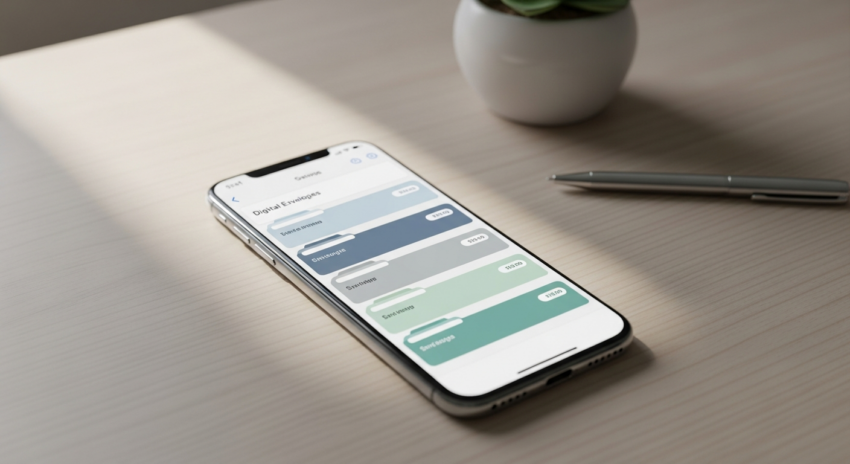


The Digital Envelope System: Modernizing Cash Stuffing for Better Financial Control
Managing personal finances can often feel like a juggling act, where tracking every penny requires immense discipline. In an era dominated by contactless payments and automatic subscriptions, the tangible feeling of money leaving your hand is lost. This disconnect is one of the primary reasons why many struggle to stick to a monthly budget. However, a modernized version of a classic method is gaining traction among those looking to optimize their savings strategy without carrying wads of physical currency: the Digital Envelope System.
If you are looking to regain control over your spending habits, eliminate financial anxiety, and build a robust safety net, understanding how to apply this method using modern technology is essential. This article will guide you through the transition from traditional “cash stuffing” to a streamlined, electronic approach that keeps your financial health on track. Please note that the following information is for educational purposes only and does not constitute professional investment advice.
What is the Digital Envelope System?
To understand the digital version, we must first look at the traditional envelope method. Historically, this system involved taking your physical paycheck, cashing it, and dividing the bills into paper envelopes labeled with specific expenses: “Groceries,” “Rent,” “Gas,” and “Entertainment.” Once an envelope was empty, spending in that category stopped until the next month. It was a brutal but effective way to ensure a zero-based budget—where every dollar is assigned a job.
The Digital Envelope System replicates this psychology but utilizes bank accounts, sub-accounts, or budgeting applications instead of paper envelopes. It creates virtual partitions for your money, allowing you to categorize your funds instantly upon receiving your income. This method leverages the convenience of digital banking while maintaining the strict discipline of the manual approach. By segregating your funds, you prevent the common mistake of seeing a large checking account balance and assuming all of it is available for discretionary spending.
For those interested in exploring more about the foundational principles of money management, you can browse our extensive resources on Savings strategies that complement this system.
The Core Mechanics: How to Set It Up
Implementing this system requires a bit of initial setup, but the long-term payoff in terms of expense control is significant. Here is a step-by-step breakdown of how to digitize your budget.
1. Analyze Your Cash Flow
Before opening any new accounts or downloading apps, you must have a clear picture of your net income. This is the amount of money that actually hits your bank account after taxes and deductions. Next, review your bank statements from the last three months to categorize your average spending. Group these expenses into fixed costs (mortgage, internet, insurance) and variable costs (dining out, groceries, hobbies).
2. Define Your “Envelopes”
In the digital world, your envelopes are categories. Common categories include:
- Fixed Bills: Rent/Mortgage, Utilities, Subscriptions.
- Living Expenses: Groceries, Fuel, Toiletries.
- Fun/Discretionary: Restaurants, Movies, Shopping.
- Sinking Funds: Car maintenance, Holiday gifts, Annual insurance premiums.
3. Choose Your Tool
You do not need sophisticated software to do this, although many apps exist. You can simply use your current bank if they offer “sub-accounts,” “vaults,” or “buckets.” Alternatively, some people open multiple no-fee checking accounts at different institutions to physically separate the money. One card is for bills, another for groceries, and a third for fun.

The Psychology Behind Why It Works
The success of the Digital Envelope System lies in behavioral finance. When all your money sits in one pile (a single checking account), it is difficult to mentally calculate how much is truly available for a coffee or a new shirt. This is often referred to as “commingling funds.”
By segregating the money, you introduce mental friction. If you want to buy concert tickets, you must check your “Entertainment” bucket. If that bucket only has $20 left, you are forced to make a conscious decision: do I not go, or do I actively transfer money from my “Groceries” bucket? This act of “stealing” from another category forces you to acknowledge the trade-off. You are not just spending money; you are taking food out of your fridge to pay for a concert. This visualization is a powerful deterrent against impulse buying.
Furthermore, this method promotes the concept of micro-savings. If you budget $400 for groceries but only spend $350, that remaining $50 stays in the digital envelope. It can roll over to the next month or be swept into a savings account, accelerating your financial goals.
Managing Sinking Funds and Irregular Expenses
One of the greatest advantages of the digital approach over cash is the management of sinking funds. These are expenses you know are coming but don’t happen every month, such as car repairs or Christmas gifts. In a cash system, keeping hundreds of dollars in a paper envelope at home is a security risk.
With digital envelopes, you can set up automatic transfers. If you know your car insurance is $600 every six months, you can set your banking app to automatically move $100 a month into a “Car Insurance” vault. When the bill arrives, the money is already there, eliminating the stress of finding funds at the last minute. This proactive approach turns an emergency into a mere inconvenience. Mastering this type of foresight is a key component of general Finance management.
Overcoming Common Challenges
Transitioning to a digital envelope system is not without its hurdles. Here are common issues and how to solve them:
- The “Swipe” Ease: It is easy to swipe a card even if the specific bucket is empty if your bank allows overdrafts or pulls from a main reserve. Solution: Turn off overdraft protection or use a prepaid debit card for your “Fun” money so the transaction declines if funds are insufficient.
- Partner Coordination: If you share finances, both partners must be on board. Solution: Use an app that syncs across two phones so both parties see the updated balance of the “Grocery” envelope in real-time.
- Tracking Fatigue: Manually logging transactions can be tiring. Solution: Use tools that automatically categorize transactions. Your job then becomes reviewing the categorization rather than data entry.
Integrating Technology for Automation
The true power of the Digital Envelope System is automation. Unlike the manual labor of stuffing cash into envelopes, digital tools can do the heavy lifting for you. You can schedule your bank to distribute your paycheck into your various buckets the morning after payday. This “pay yourself first” mentality ensures that your bills and savings are prioritized before you have a chance to spend on non-essentials.
For example, if you are looking to build a safety net, you can create an “Emergency Fund” envelope. Automating a transfer of even 5% of your income into this bucket creates a habit of consistency. While this article focuses on savings mechanics, understanding the broader landscape of Financial Products can help you choose the right high-yield accounts for these longer-term digital envelopes.
Conclusion
The Digital Envelope System is more than just a budgeting hack; it is a lifestyle change that encourages intentional spending. By giving every dollar a specific purpose and separating your funds into virtual containers, you gain clarity and reduce the stress associated with money management. It combines the disciplined logic of our grandparents’ generation with the speed and security of modern fintech.
Whether you are trying to get out of debt, save for a vacation, or simply stop living paycheck to paycheck, this method provides the structure needed to succeed. Start with a few simple categories, automate your transfers, and watch your savings rate improve over time.
Frequently Asked Questions (FAQ)
1. Can I use credit cards with the Digital Envelope System?
Yes, but it requires discipline. You can use a credit card for the points or rewards, but you must immediately move the equivalent amount of cash from your digital envelope (e.g., “Groceries”) to a “Credit Card Payment” holding category. If you cannot pay off the balance in full every month, it is recommended to stick to debit cards until your budget is stable.
2. What happens if I overspend in a specific category?
If you spend more than allocated in one envelope (e.g., Dining Out), you must cover the difference by transferring money from another envelope (e.g., Clothing or Entertainment). This enforces the reality that your money is finite and encourages better decision-making for the remainder of the month.
About the Author: Money Minds, specialists in economics, finance, and investment.
View profile on LinkedIn
Related Posts