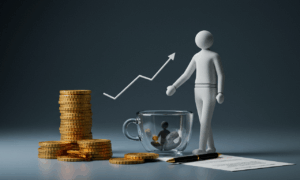

The Tragedy of the Commons: How Self-Interest Destroys Everyone’s Resources
The Tragedy of the Commons is a powerful economic theory that explains a paradox we see every day: how rational individual actions can lead to disastrous collective results. Imagine a shared resource, open to everyone, from a public park to the fish in the ocean. When each person acts in their own self-interest, they can ultimately deplete or destroy that resource for the entire community. This isn’t just an abstract idea; it has profound implications for our environment, our communities, and even our personal finance. This article will break down this crucial concept, show you how it appears in your daily life, and provide actionable strategies to counteract its destructive effects.
What Exactly is The Tragedy of the Commons?
The term was popularized by ecologist Garrett Hardin. The classic illustration involves a pasture, or commons, open to all local herders. Each herder has a simple goal: maximize their profit. The most logical way to do this is to add another animal to their herd to graze on the free grass. The benefit of that extra animal goes directly to the individual herder, while the cost—a slight increase in grazing pressure—is shared by everyone.
Individually, each herder’s decision makes perfect sense. However, when every herder follows the same rational logic, the number of animals explodes. The pasture becomes overgrazed, the grass dies, and the shared resource is destroyed, leaving no herder able to support their animals. The pursuit of individual gain leads to collective ruin. This is the core of The Tragedy of the Commons: the conflict between short-term self-interest and long-term common good when dealing with shared resources.
Modern Examples Beyond the Pasture
This principle extends far beyond agricultural fields and is highly relevant in our modern world. You can see its effects everywhere if you know where to look. Consider these examples:
- Environmental Resources: This is the most direct parallel. Overfishing in the oceans occurs because each fishing fleet tries to maximize its catch, leading to the collapse of fish stocks that harms the entire industry. Similarly, air and water pollution happens when individual factories or people find it cheaper to pollute than to invest in clean technologies, degrading the shared environment for all.
- Public Goods and Services: Think about a congested highway during rush hour. Each person decides to drive because it is the fastest way for them to get to work. But when everyone makes that same decision, the result is a massive traffic jam that slows everyone down. Public Wi-Fi in a café is another example; when too many people stream high-definition videos, the bandwidth is depleted, and the internet becomes unusably slow for everyone.
- Corporate and Financial Settings: Within a company, a shared budget for travel or supplies can be seen as a commons. If every employee tries to maximize their use of the budget without restraint, the funds can be quickly exhausted, preventing essential business activities later on. For more insights on broad economic trends, you can explore our section on the Economy.

How the Tragedy Impacts Your Personal Finances
The concept might seem large-scale, but its principles can directly affect your wallet and your financial planning. Recognizing these patterns is the first step toward making smarter decisions.
One clear example is an investment bubble. When an asset like a stock or a cryptocurrency starts to rise rapidly, individual investors rush in, driven by the fear of missing out (FOMO) and the desire for quick profits. Each person acting in their self-interest helps to inflate the bubble further. However, the underlying value of the asset may not support the price. Eventually, the bubble bursts, and those who got in late are left with significant losses. The collective pursuit of profit depletes the perceived value for many. You can learn more about sound Investment strategies to avoid these pitfalls on our blog.
It can also apply to household finances. A shared family bank account or credit card is a form of commons. If one family member consistently overspends for their own immediate gratification, they can deplete the family’s shared savings or run up debt, jeopardizing the financial security of the entire household. The individual benefit of a single purchase is outweighed by the long-term collective harm.
Solutions and Strategies to Avoid the Tragedy
Fortunately, the Tragedy of the Commons is not inevitable. Throughout history, societies have developed ways to manage shared resources effectively. These solutions generally fall into three categories, and you can apply their logic to your own financial life.
- Top-Down Regulation: This involves a central authority setting rules and enforcing them. In the pasture example, a government or landowner could limit the number of cattle each herder can graze. In modern finance, government bodies regulate markets to prevent insider trading and other abuses that could destroy investor confidence—a shared resource. For your personal finances, this is like setting a firm family budget with clear rules that everyone must follow.
- Privatization: Another solution is to divide the common resource into private parcels. If each herder owned their own patch of land, they would have a strong incentive to manage it sustainably to ensure its long-term productivity. In finance, this is analogous to having separate bank accounts for personal spending while contributing to a shared account for joint expenses, giving each person ownership over their financial decisions.
- Community Agreements: This bottom-up approach involves the users of the resource coming together to create their own rules and monitoring system. It relies on trust, communication, and a shared commitment to the common good. For a household, this means sitting down together, discussing financial goals, and agreeing on a spending and savings plan that benefits everyone.
At its core, avoiding the tragedy requires a shift in perspective—from focusing solely on immediate individual gain to understanding the long-term collective consequences. It means asking not just, What is best for me right now? but also, What happens if everyone does this?
Conclusion
The Tragedy of the Commons is more than an economic theory; it is a fundamental lesson in human behavior and systems thinking. It teaches us that unregulated self-interest in the context of a shared resource is a recipe for disaster. By understanding this principle, you can become a more informed citizen, a more cautious investor, and a more responsible steward of your own family’s finances. The key takeaway is the critical importance of foresight, cooperation, and well-designed rules to ensure that our valuable shared resources—whether they are environmental, social, or financial—are preserved for the future.
Frequently Asked Questions (FAQ)
Is the Tragedy of the Commons inevitable when a resource is shared?
No, it is not inevitable. While it is a strong tendency, it can be prevented through effective management strategies. These include government regulation (like quotas or permits), privatization of the resource, or community-led agreements where users create and enforce their own rules for sustainable use. Success depends on clear communication, trust, and effective enforcement.
How can I apply this concept to my investment strategy?
To avoid the financial version of this tragedy, you should be wary of herd mentality and speculative bubbles. When everyone is rushing into a single hot stock or asset based on hype, that is a warning sign. Instead of chasing short-term gains driven by collective excitement, focus on a disciplined, long-term investment strategy based on fundamental value and diversification. This protects you from the eventual collapse that often follows such frenzies.
Are taxes a way to solve the Tragedy of the Commons?
Yes, taxes can be a powerful tool. A tax designed to curb overuse is known as a Pigouvian tax. For example, a carbon tax makes polluting more expensive, forcing companies and individuals to internalize the cost of their impact on the shared atmosphere. This creates a financial incentive to reduce pollution, helping to preserve the common good. Similarly, taxes on certain financial transactions can be used to discourage high-frequency trading that might destabilize markets.
About the Author: Money Minds, specialists in economics, finance, and investment.
View profile on LinkedIn
Related Posts