
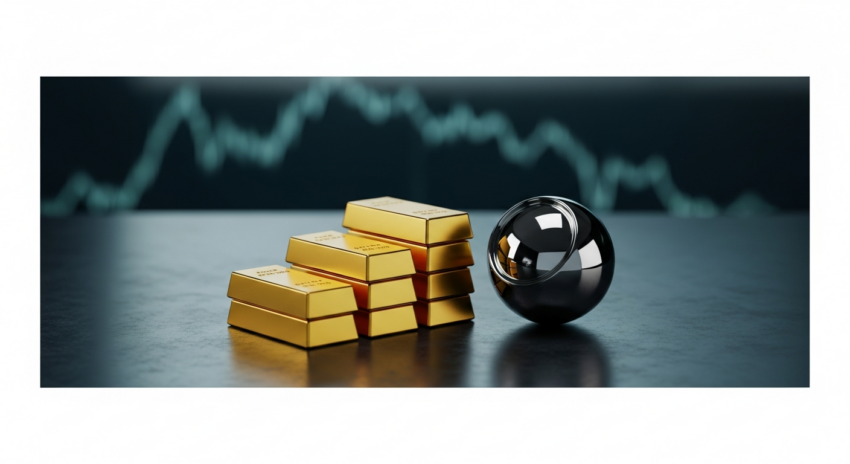


The world of investment is constantly shifting, and staying informed is the best way to navigate it successfully. Recently, a major event has captured the attention of financial markets globally: gold has reached unprecedented all-time highs, surpassing the historic barrier of two thousand five hundred dollars per ounce. If you are looking to understand how these global shifts impact your savings and personal wealth, this article will provide you with highly relevant information. We will break down exactly what this recent news means, the objective data behind the surge, and how it translates to everyday financial decisions.
Over the past few days, financial markets witnessed a historic milestone as precious metal futures surged to record levels. The objective data shows a rapid appreciation in the value of this asset, driven heavily by expectations that central banks are preparing to reduce interest rates in the immediate future. Furthermore, global uncertainty and persistent inflation concerns have fueled this massive rally. But what does this actually mean for someone who is not a Wall Street expert? Let us deconstruct the situation step by step so you can grasp the mechanics behind these market movements.
To understand this investment trend, we must first look at the concept of interest rates. Interest rates are essentially the cost of borrowing money or the reward for saving it. When central banks lower interest rates, the yield on traditional savings accounts and government bonds decreases. Imagine you have a savings account that used to pay you a generous annual return; if that return suddenly drops, you might start looking for other places to put your money. Because tangible commodities do not pay dividends or interest, they typically become much more attractive to buyers when the returns on cash and bonds fall. This shift in capital placement is a fundamental concept in asset management.
Understanding these macroeconomic shifts is absolutely crucial for any prudent saver. Changes in interest rates do not just affect precious metals; they ripple through the entire financial system, impacting housing loans, corporate expansions, and everyday consumer prices. For more in-depth insights on how these broad financial movements function and affect your daily life, you can explore our dedicated section on the economy, where we analyze the core building blocks of global markets.

Another vital concept highlighted by this recent news is the idea of a safe-haven asset. In the realm of capital allocation and wealth preservation, a safe-haven asset is something expected to retain or increase in value during times of market turbulence. Think of it like carrying an umbrella when the weather forecast predicts a heavy storm. You do not carry the umbrella because it makes you walk faster; you carry it to protect yourself from getting wet. Similarly, people allocate funds to tangible assets to protect their purchasing power when they fear inflation or geopolitical instability might erode the value of fiat currencies, which is the paper money we use daily.
Inflation acts as the silent thief of purchasing power. If you leave your funds hidden under a mattress, the numerical amount remains exactly the same year after year, but the amount of groceries, fuel, and services you can buy with it steadily decreases over time. When news breaks that commodity prices are skyrocketing, it is often a direct symptom of people collectively moving their wealth into tangible items that cannot be printed on demand by a government. This behavioral economics perspective explains why the recent surge in market prices is not just a random anomaly, but a calculated response by global participants seeking to shield their hard-earned capital.
How does this apply to daily life and personal portfolios? You might wonder if you need to go out and buy physical bars of metal to participate in this market. The short answer is no. Today, the financial ecosystem offers multiple avenues for portfolio diversification. Here are the most common ways everyday individuals approach this sector:
- Physical Ownership: This involves acquiring tangible items like bullion or coins. While it offers a psychological sense of security, it introduces real-world logistical challenges, such as finding secure storage and paying ongoing insurance premiums.
- Exchange Traded Funds: These financial instruments track the price of the underlying asset. They offer high liquidity, meaning you can buy and sell shares during regular market hours from a computer or smartphone without ever touching the physical metal.
- Mining Equities: Purchasing stock in companies that extract the resource from the earth is another popular route. This adds an operational risk layer, as the company management, energy costs, and extraction efficiency play a significant role in the stock performance, independent of the commodity price itself.
Exploring these different avenues is an essential part of building a robust financial strategy. Whether you are interested in commodities, stocks, or other asset classes, expanding your knowledge base is the key to success. You can find more comprehensive guides, strategies, and educational articles in our main investment hub.
When reading financial news, it is easy to get caught up in the excitement of record-breaking numbers. However, evaluating news rationally is a skill every saver must develop. Here is a simple framework to help you analyze future market events:
- Identify the core data: Look past the sensational headlines to find the objective numbers, such as a specific price target being hit or a confirmed policy change by a central bank.
- Understand the macroeconomic context: Ask yourself why this event is happening. Is it due to inflation, shifting employment data, or geopolitical tension?
- Evaluate your personal strategy: Determine if this news actually requires you to adjust your long-term wealth preservation plan, or if it is merely short-term market noise that you can safely ignore.
It is strictly necessary to state clearly that the information provided in this article is purely educational and informative. These are not investment recommendations. Every individual has a unique financial situation, risk tolerance, and time horizon. Before making any financial decisions or altering your portfolio, it is highly advisable to conduct your own independent research or consult with a certified financial planner who can tailor specific advice to your personal needs. The ultimate goal here is to empower you with the knowledge to understand complex financial news, not to instruct you on where to put your money.
Frequently Asked Questions
Why do people invest in gold when interest rates drop?
When central banks lower interest rates, the yield or financial return on traditional safe vehicles, like government bonds or high-yield savings accounts, decreases significantly. Since precious metals do not pay an ongoing yield or dividend, they become relatively more attractive to buyers when the competition from cash and bonds weakens. Consequently, massive amounts of capital flow into commodities, driving the market price upward.
Is it mandatory to buy physical commodities to participate in this market?
Not at all. While buying physical coins or bars is a traditional option, it requires secure storage and insurance. Modern financial markets provide efficient alternatives such as Exchange Traded Funds, which digitally track the price of the asset and can be bought or sold easily through a standard brokerage account. Additionally, individuals can look into purchasing shares of mining companies, which often see their profit margins expand when the price of the underlying commodity rises.
About the Author: Money Minds, specialists in economics, finance, and investment.
View profile on LinkedIn